Grab cut tool
The Grab cut tool allows extracting objects that are placed in the foreground of an image. Grab cut is especially useful when there is a high contrast between foreground and background. When Grab cut selection is not exactly what you aim for, you can also use the tool options to add or subtract from the selection.
To label with the Grab cut tool
- In the Projects module, click the necessary project.
-
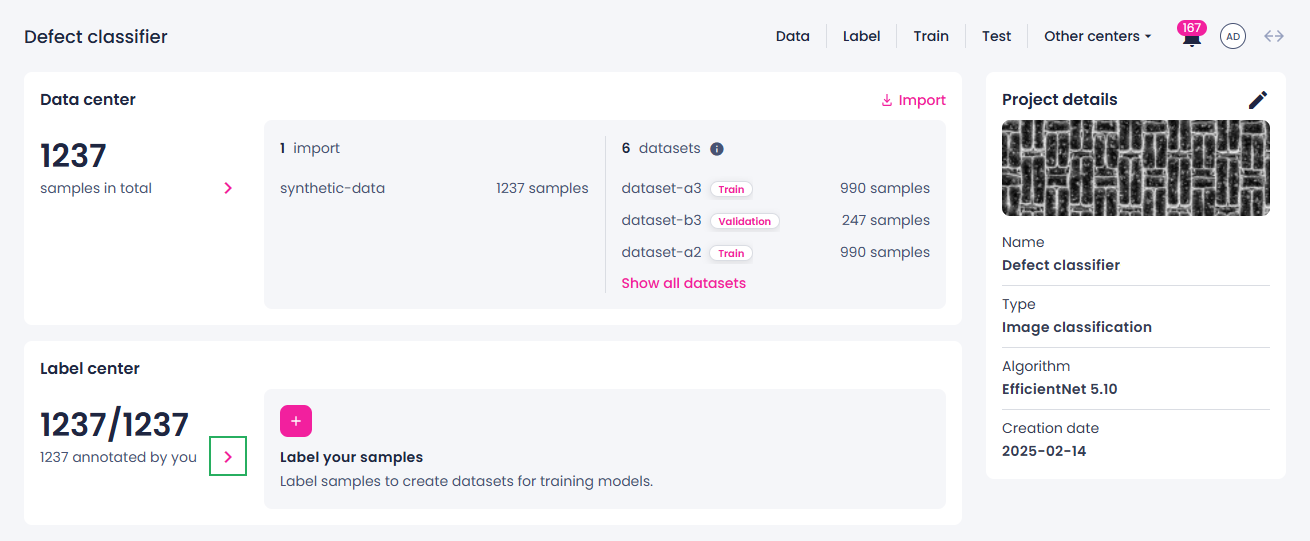
In the Label center section, select the needed import or click the right-arrow button (
 ).
).
The data opens in the label center.
-
On the top toolbar, switch to the single view.
-
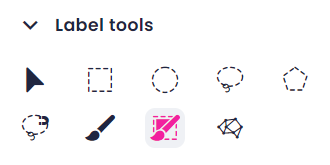
In the left panel, in the Label tools section, select the Grab cut tool.
Note
If you don't see the needed tool, create at least one class.
-
In the Classes section, select the necessary class.
-
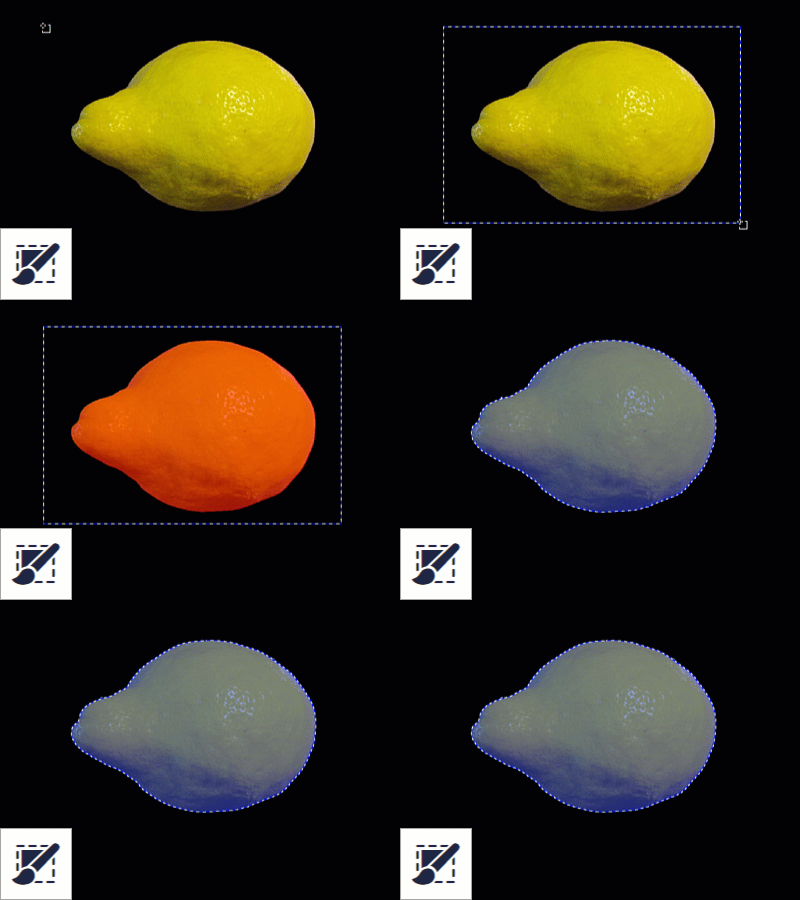
Create a box selection by dragging over the area where the object you want to select is located.
The Grab cut tool will try to extract the object from the foreground.
-
To edit the selection using strokes:
- Adjust the stroke size.
- To add to the selection, in the left panel, click Paint foreground, and then paint the area you want to add.
- To remove painted areas from the current selection, in the left panel, click Paint background, and then paint the area you want to remove.
Note
You do not have to paint exactly the area you want to add or subtract. Just painting the inner or outer edges of it will in many cases be enough.
-
Click Apply mask.
-
To adjust the selected element, do one of the following:
- To add to an existing annotation, select the necessary item using the Select tool. Select the necessary tool, click Add to item, and then make a new selection to intersect with the existing selection.
- To subtract from an existing item, select the necessary item using the Select tool. Select the necessary tool, click Cut from item, and then make a new selection to intersect with the existing selection.
-
To change the class of a selected label, in the Classes list, select the necessary class.
Your annotations are displayed in the Annotations panel on the right. Note that members with the Labeler role can view only their own annotations or annotations generated by the Prediction tool.
-
In the lower-right corner, click Submit.
To navigate between samples, use one of the following:
- In the single view, use the arrow buttons on the bottom toolbar to navigate between samples or specify the number of the sample you want to open.
-
In the thumbnails and list views, you can view a maximum of 100 samples per page:
- Use the Status panel on the left to navigate between the 100 samples on the page. You can also get the overview of the labeled and unlabeled samples within the page. The labeled samples are marked with green or blue, while unlabeled – with gray. Green indicates that the sample is annotated by the logged-in user, while blue indicates that the annotation comes from another user or is generated by the Prediction tool.
- Use the arrow buttons on the bottom toolbar to navigate between pages or specify the number of the page you want to open.